Geospatial Researcher, Infra Engineer, InSAR Engineer, Full-stack Developer, Data Analyst, AI-native Builder
Starting from geodesy / geospatial research (M.S.), I measure and validate ground displacement with satellite InSAR — then build the systems on top of it AI-native and operate them across multiple servers, storage, and monitoring.
I like understanding a research domain deeply while closing the whole loop on top of it — up to the production system.
On a geospatial-engineering M.S. foundation (crustal deformation · GNSS), I cover planning & design + frontend + backend + infra/CI-CD + AI end-to-end as one full-stack engineer. SAR / InSAR is the same ground-displacement my thesis studied — met again through a different sensor.
The path data takes — pipelines by project
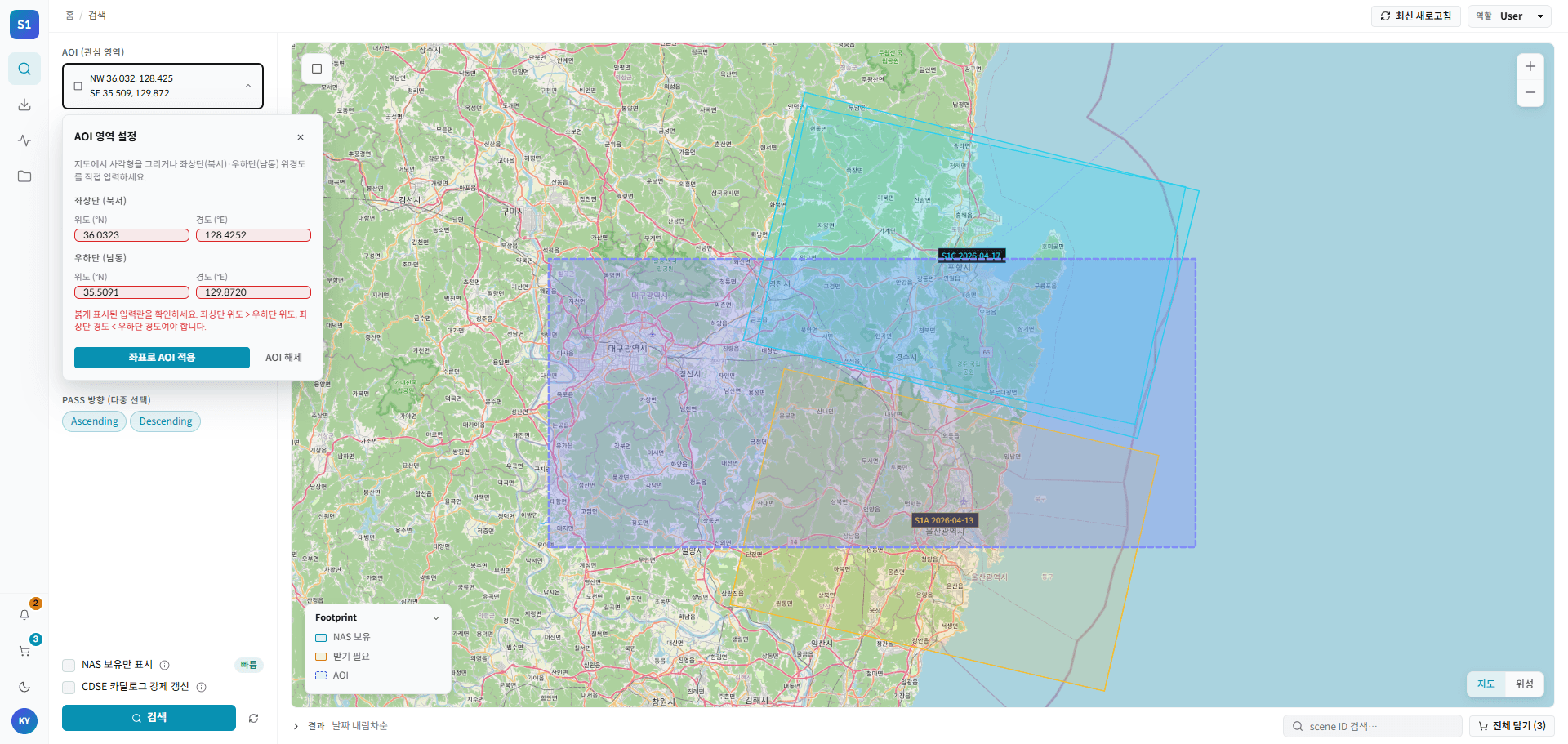
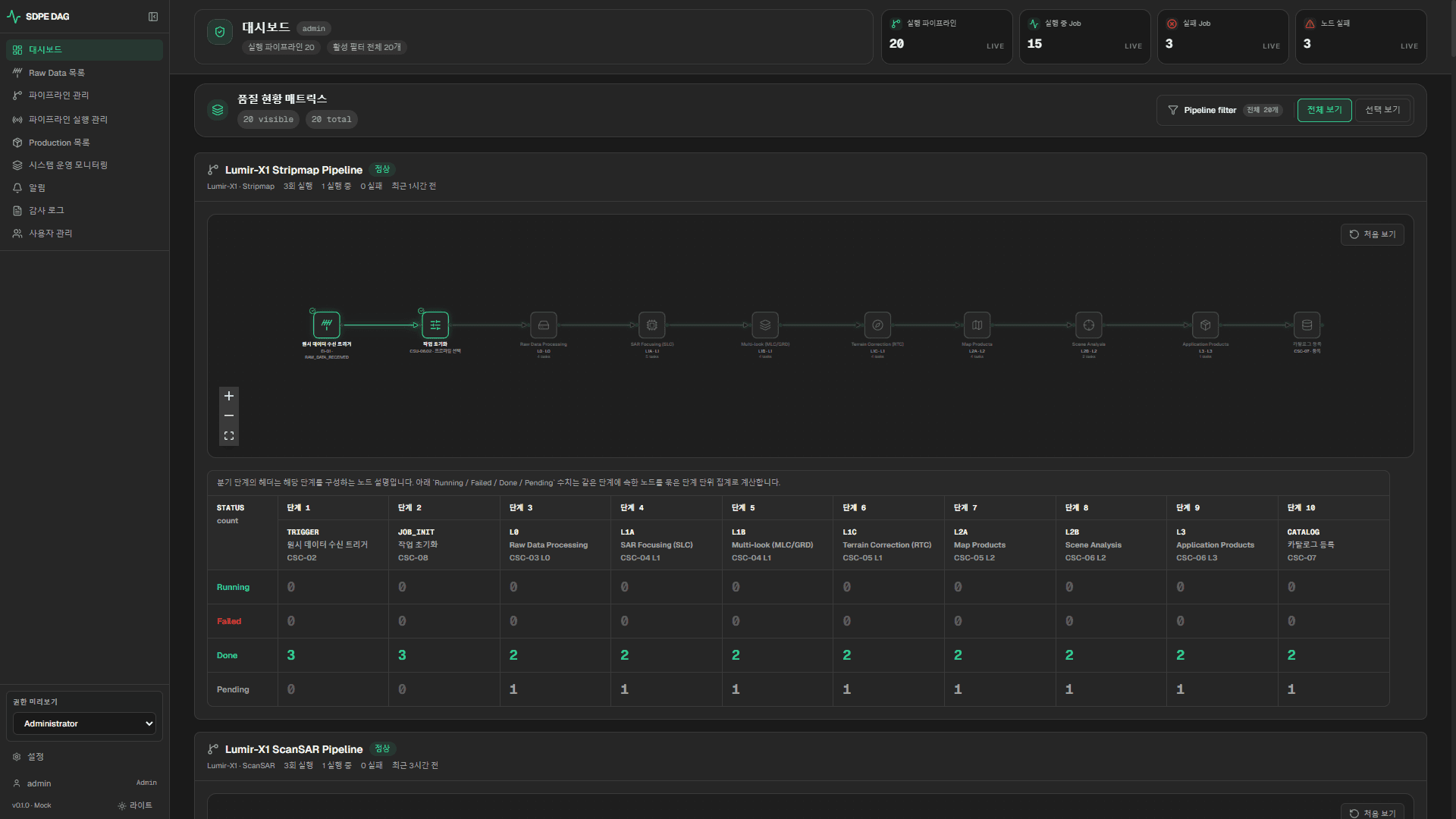
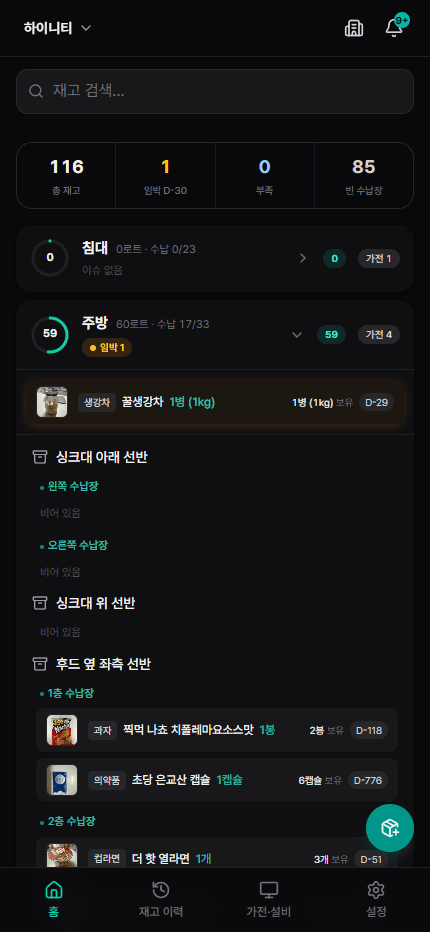
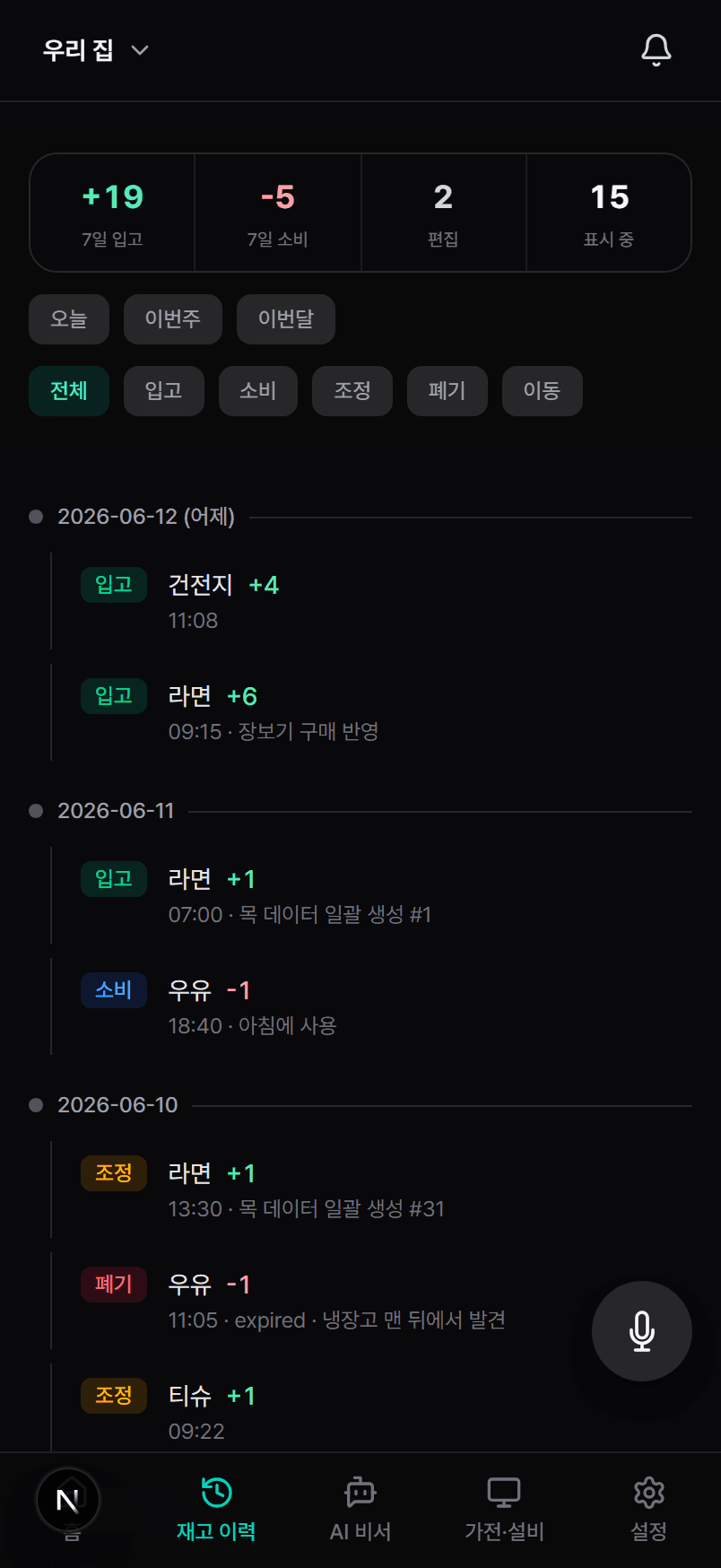
A quick look at how data travels — input → processing → user (or product) — across three projects: the SAR platform, SDPE, and him. The precise call graphs live in each project's detail diagram.
From the operator console (a React Flow canvas) a DAG is deployed; the Pipeline Workflow subsystem's orchestrator (CSC-08) acts as a control tower, assigning per-stage jobs over pgmq (SI-04) and tracking completion (SI-03) to advance L0→L3. Nine CSCs map onto collection (DCS), signal processing (SPS), post-processing (PPS) and service (DSS).
An operator runs a playbook as a button in Semaphore (Ansible web UI); Ansible on the .173 control hub configures the heterogeneous 3-node fleet (SSH+become, LAN code push for the offline node), and Prometheus scrapes each node's exporter for Grafana/Alertmanager to visualize and alert. Disk exhaustion comes back as a pre-alert before the auto-eviction fires.
One mobile inventory app, top to bottom — the command (write) and query (read) lanes splitting under the pages are the CQRS structure itself. The two devices beside it are the end of that flow: a lock screen with the FCM push delivered, and the app dashboard that opens when you tap it.
Stage diagnosis starts from your main role
The same SAR work means something different when a geospatial-engineering major (M.S.) does it versus when a non-major does it as a domain expansion. I'm the former — the measured quantity, ground displacement, was my research topic. The matrix below and the 5-stage model anchor my current coordinates.
AI usage · 5 stages — in my own words
The stages aren't sequential steps. Once you flip into thinking-partner mode — set the context → let AI ask you questions → think again → give feedback → and watch your own thinking sharpen in the loop — stages 3, 4, and 5 unlock together.
Where & what — from frontend to full-stack
Starting at Lumir with the satellite-imagery search frontend, then through internal systems, I'm now expanding into full-stack — owning the whole cycle across backend, SAR processing, and AI.
- 2023FrontendSatellite imagery search platform
Built the desktop frontend for a Sentinel-1 satellite-imagery search and data-processing pipeline platform — the starting point of absorbing the SAR domain as a role expansion.
- 2024FrontendLumir hiring system
Frontend for an in-house hiring platform spanning application → screening → interview → onboarding → probation → hire.
- 2025FrontendLumir scheduling system
Frontend for an in-house scheduling platform that registers room, vehicle, and lodging reservations.
- 2026Full-stack · in parallelPresentThree platforms at once — into backend, SAR processing & AI
Beyond frontend — running the three projects below concurrently, expanding into owning the whole cycle: planning · frontend · backend · infra · AI.
Same ingredients. Different course.
An assembled resume — the same 6 projects read differently for different audiences. Use the track toggle below to switch the depth and angle to the company / domain context.
Main role · Learned domain
I separate my core engineering stack from the SAR processing tools I picked up on top of my research domain. Depth-within-role and role-expansion are two distinct things.
Core · Full-stack engineering
- Linux 서버 운영· Multi-node · troubleshooting
- 서버 · 네트워크· 3-node topology · LAN rework
- NAS · 스토리지· RAID5 27TB · NFS / SMB2 / CIFS
- Docker · docker-compose
- GitLab CI/CD· Built from scratch + custom mail
- Ansible · systemd· Ops automation · scheduled eviction
- 모니터링· Uptime Kuma fleet + Grafana / Prometheus
- 장애 대응 · 성능· Disk-full DB recovery · load diagnosis · 81MB→1.1MB
- Terraform IaC· Recipes for both S3 sides
- Kubernetes· Learning · CKA prep (homelab)
- FastAPI· Analysis server (bridged to NestJS)
- TypeScript
- Next.js
- React
- Tailwind CSS
- Playwright (e2e)
- NestJS
- CQRS· @nestjs/cqrs
- TypeORM
- PostgreSQL
- pgmq· PostgreSQL message queue
- DDD 5-layer· domain / business / context / handlers / interfaces
- Jest + Testcontainers
- Claude Code· Primary thinking partner · 100% AI native
- 다중 agent 워크트리· Agents 1–4 in parallel + handoff system
- Brain Trinity 위키· Karpathy /raw pattern + skill system
Learned domain · SAR processing
- Sentinel-1 SAR
- ESA SNAP 12· MicrowaveTBX (SAR)
- SNAPHU· Phase unwrapping
- MintPy· SBAS time series
- ISCE2· New track — speed unlocked
- StaMPS PSI· Octave + 12 patches
- DInSAR · SBAS · PSInSAR
- PyAPS + ERA5· Atmospheric correction
- CDSE· Copernicus Data Space
- QGIS
- Python (분석)· rasterio · geopandas · shapely
- Snappy· SNAP Python bridge
Questions you might have
The questions recruiters and AI search tend to ask, gathered in one place. Each answer links straight to a deeper page.
A full-stack web developer who covers one full cycle — planning and design through frontend, backend, infra/CI-CD, and AI. He expands his role quickly with AI as a thinking partner, and has extended that reach into the SAR / satellite domain he first met at work.
Changuk Woo
Geospatial researcher · full-stack & infra engineer. On a geospatial-engineering M.S. foundation (crustal deformation · GNSS), I cover planning & design + frontend + backend + infra/CI-CD + AI end-to-end as one full-stack engineer. SAR / InSAR is the same ground-displacement my thesis studied — met again through a different sensor.
Need an infra engineer who operates servers, storage, and CI/CD — and owns incidents and performance end to end?
Do you need someone who can analyze observational / experimental data and build the systems on top of it?
Do you need a full-stack engineer who treats AI as a collaborator, not just a tool?
Looking for someone who owns one full cycle — code, planning, infra, and testing?
This portfolio, the self-diagnosis, and all 6 project briefs were compiled from a meta system called Brain Trinity. It uses the Karpathy LLM Wiki pattern + Claude Code collaboration + a skill system, and currently holds 56+ accumulated wiki pages.
Given an unfamiliar domain, I believe structured information + an AI-native foundation can solve almost anything. Brain Trinity is both the methodology and the asset — and I can demo it live in an interview.
- →Plan to grow Brain Trinity into a complete personal system (voice + journal + meeting notes + PDFs unified)